Ivana Ross

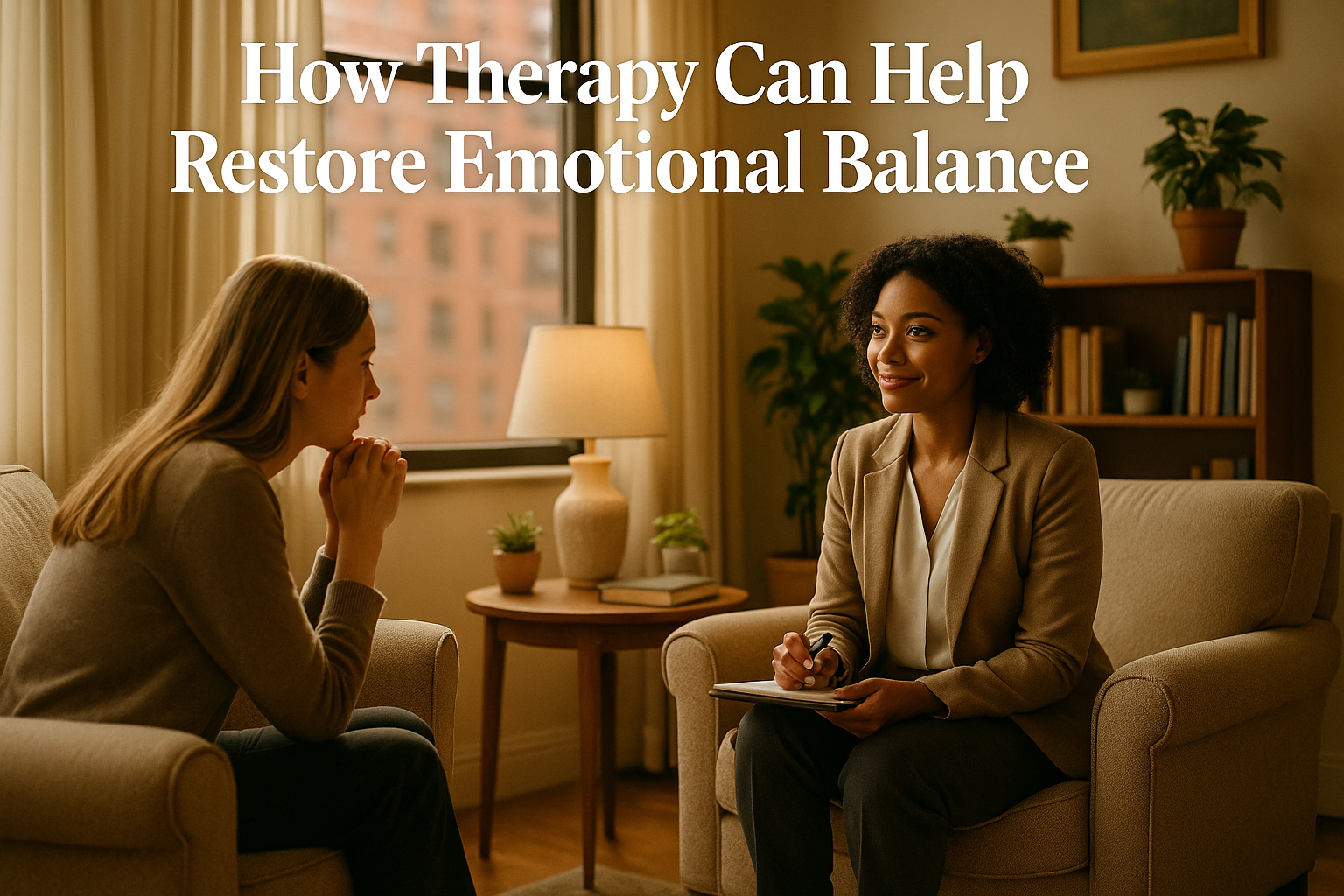
How Therapy Can Help Restore Emotional Balance

Emotional balance is essential for navigating life’s inevitable ups and downs, yet even the most resilient individuals can feel destabilized by stress, conflict, or difficult transitions. This article explores how effective therapy, tailored to your unique needs, can guide you toward renewed calm, greater self-understanding, and stronger relationships.

Understanding Emotional Imbalance and Its Impact

Emotional imbalance often manifests as more than just having a bad day; it’s a state where emotional distress feels unmanageable or ever-present. People experiencing emotional imbalance can notice persistent anxiety that doesn’t resolve, unpredictable mood swings, excessive irritability, or even a troubling sense of emotional numbness—where happiness, sadness, or anger are replaced with a sense of emptiness or detachment.

These symptoms quietly weave themselves into daily life. A person may find that small decisions become overwhelming or that typical routines—getting out of bed, preparing meals, going to work—require immense effort. Relationships, too, begin to reflect these inner struggles. Partners or family members might sense growing distance, emotional reactivity, or misunderstandings that seem to have no clear origin. Workplace productivity suffers, as focus and motivation become difficult to maintain. Sometimes, simple invitations become sources of dread, resulting in withdrawal from friends or activities that once brought joy.

The ripple effects of unaddressed emotional strain can intensify over time. Irritability may give rise to frequent arguments or conflicts, both at home and at work. Chronic anxiety can contribute to indecision or avoidance, making it harder to progress in personal or professional goals. Without intervention, these disruptions may foster feelings of isolation and a belief that things cannot change.

Recognizing when emotions are out of balance is a courageous first step. Noticing patterns of conflict, difficulty functioning, or a lack of enjoyment in everyday experiences signals a need for deeper self-care. Therapy offers a space to explore these symptoms with guidance—not as a list of faults, but as signals pointing toward the possibility of relief, growth, and renewed emotional equilibrium.

The Therapeutic Process Individualized for Lasting Change

Therapy’s power lies in meeting each person’s unique experience of emotional imbalance with an approach that is flexible and deeply personalized. A compassionate professional like Ivana Ross recognizes that what helps one client feel calmer might not suit another—and so each therapeutic journey is collaboratively tailored. Early sessions often involve gentle exploration, building trust through confidentiality and genuine presence. This safe space makes it possible for someone to speak openly, even about feelings that seem shameful or overwhelming.

Drawing from cognitive-behavioral therapy (CBT), a therapist might guide clients to notice patterns in their thoughts that fuel anxiety or self-criticism, and together, experiment with new, healthier ways of thinking. Mindfulness-based approaches can be woven in, with simple practices designed to help the client anchor themselves in the present, soothing spikes of worry or anger. For others, relational techniques are central—deepening insight into how past relationships influence current reactions, and rehearsing new ways of communicating or setting boundaries in real life.

Therapy isn’t rigid; it’s a living process, adapting as needs shift. Sometimes, a solution-focused conversation will help a client identify small but meaningful actions to interrupt old habits. At other times, the emphasis might be on skill-building—role-playing tough conversations, learning emotion regulation tools, or practicing self-compassion in the face of setbacks.

Above all, an effective therapist serves as a steadfast partner. With respect for confidentiality and a commitment to relevance, they help clients build resilience and clarity, ensuring that shifts in emotional balance are not only understood, but truly felt in everyday life.

Restoring Balance: Building Healthy Habits and Relationships

Therapy shines when it helps turn personal insights into meaningful action, moving clients beyond awareness to consistent, healthier emotional habits and more nurturing connections. In session, clients learn to translate their understanding of triggers and recurring patterns into new behaviors that support emotional steadiness. Take, for example, the challenge of setting boundaries. A therapist might guide someone through recognizing when they feel overwhelmed in relationships, then support practicing direct communication—role-playing how to decline unreasonable requests or articulate emotional needs. Over time, clients often find that this skill not only reduces resentment but also attracts more respectful, balanced interactions at work or with family.

Another foundational shift occurs as clients develop healthier strategies for managing intense feelings. Instead of lashing out or withdrawing when anger, sadness, or anxiety hits, therapy can provide tools like grounding techniques or cognitive reframing. For instance, someone might use brief mindfulness breathwork when feeling flooded during a disagreement, allowing them to respond thoughtfully rather than react impulsively.

Self-compassion is another area where therapy opens doorways. By challenging perfectionistic or harsh self-talk, clients learn practical steps to treat themselves with kindness—a transformative shift that fuels resilience during setbacks. As these habits take root, the ripple effects touch every area, from dating (less people-pleasing, more authenticity) to navigating family dynamics (constructive dialogue, healthier detachment) and advancing at work (asserting boundaries without guilt, greater confidence in collaboration).

Accessible, professional support—from concierge-style care to flexible online options—makes it possible for anyone to sustain these changes. With the right guidance, emotional balance becomes not just a fleeting state, but a lived reality woven through daily life and relationships.

Conclusions

Therapy is not just for crisis—it’s an accessible, personalized path to rediscovering emotional equilibrium and creating more meaningful connections. Whether you’re facing a specific challenge or want to regain your footing in daily life, the right therapeutic relationship can equip you with the insight, strategies, and support you need. You don’t have to navigate emotional change alone.


How Childhood Experiences Shape Our Adult Relationships

Our earliest relationships influence how we relate to others, often in ways we do not consciously realize. By thoughtfully exploring how childhood experiences shape trust, communication, and emotional needs in adulthood, we can better understand—and heal—relationship patterns that may be holding us back.

The Blueprint of Attachment

Attachment theory offers a powerful lens for understanding how our earliest connections with caregivers quietly influence our emotional lives as adults. According to this theory, the emotional bond we develop in childhood forms a sort of blueprint—a template for how we expect closeness, comfort, and love to function with others. When caregivers are responsive, consistent, and emotionally available, a child is likely to develop a secure attachment. Children with secure attachment typically feel worthy of love and learn that others can be trusted. In adulthood, this often translates to healthy independence, comfortable vulnerability, and the ability to seek and give support in relationships.

Other attachment styles, shaped by less predictable or more distressing caregiving, may also emerge. Anxious attachment can develop when a caregiver is inconsistent—sometimes nurturing, sometimes preoccupied or unavailable. As adults, those with anxious attachment may fear abandonment, crave reassurance, and worry excessively about their partner’s feelings. Avoidant attachment tends to arise when caregivers are emotionally distant or dismissive; people with this style may grow into self-reliant adults who keep emotional distance from loved ones and struggle to depend on others. Disorganized attachment is often the result of frightening or chaotic caregiving, leading to confusion, fear, or push-pull behaviors in relationships later in life.

Recognizing your own attachment style can be empowering rather than limiting. Notice recurring patterns: Are you often anxious about your partner leaving? Do you feel suffocated when someone gets too close? Is it hard to express or recognize your needs? Exploring these questions with honesty and curiosity allows for growth. Remember, attachment is not a rigid destiny. With self-awareness and nurturing connections—whether through therapy, friendships, or healthy romantic partnerships—attachment patterns can shift. Sharing your concerns, seeking gentle feedback, and practicing self-compassion are steps toward forming the secure, loving connections everyone deserves. Each step toward understanding rewrites your relationship blueprint, making real change possible.

Repeating the Past in Present Relationships

Unresolved childhood experiences often surface in the most intimate corners of our adult lives, weaving old, familiar patterns into new relationships—sometimes so subtly that we don’t notice until a sense of déjà vu arises. Children who grew up with persistent criticism may find themselves, years later, relentlessly seeking validation from romantic partners or colleagues. Each compliment or approval feels temporarily soothing, yet never quite satisfies the underlying hunger for acceptance. Others who experienced neglect might become people-pleasers, striving to meet others’ needs in hopes of earning affection or simply avoiding rejection.

Even overprotection, which is often rooted in genuine love, can sow uncertainty later on. If a parent shielded a child so zealously that the child never risked mistakes, that grown child may struggle with decision-making or gravitate toward controlling partners who replicate the safety—and restriction—of their early caretakers.

Many carry a deep-seated difficulty trusting, a response to caregivers who were unpredictable, emotionally unavailable, or intrusive. This mistrust can spur a cycle of pushing others away for fear of being left—or, paradoxically, clinging tightly to avoid abandonment. In professional life, the echoes of early dynamics may appear in trouble asserting oneself, tolerating criticism, or interpreting neutral feedback as threats.

To begin gently exploring these patterns, try a few reflective practices. In quiet moments, ask yourself: When I feel anxious in a relationship, what memories does it evoke? Who in my early life made me feel truly seen or, conversely, unseen? Journal about your first experiences of safety, affection, or disappointment—notice any themes in how you sought connection or protected yourself from hurt.

Recognizing these repeating scripts is not about blame, but about understanding and self-compassion. With awareness, we gain choices: the opportunity to respond in new ways instead of reenacting the past. This self-inquiry lays the groundwork for the healing and change explored in the next steps.

Breaking the Cycle Through Awareness and Healing

Recognizing the underlying origins of our relationship struggles can unlock the door to meaningful change, but true transformation requires more than simply noticing the patterns—we must learn to confront and heal them. When old wounds drive our reactions, simply willing ourselves to “do better” is rarely enough. *Awareness*, however, is a powerful first step. By witnessing our triggers and automatic responses with *curiosity* rather than judgment, we begin to loosen the grip of the past on how we relate in the present. Mindfulness practices—such as pausing to notice physical sensations when feeling upset—can help us stay anchored in the now rather than being swept away by ingrained reactions.

As insight grows, self-compassion becomes essential. Many internalize a harsh inner critic that echoes early relationships, but healing happens when we treat ourselves with the gentleness and reassurance we may have longed for as children. For example, when a partner’s disagreement evokes old feelings of rejection, offering ourselves kind self-talk (“It makes sense I feel this way; it’s okay to feel hurt”) can soften shame and invite new responses.

Setting boundaries is another necessary tool for breaking cycles. Establishing where we end and others begin promotes healthier connections, particularly if early environments blurred these lines—whether through neglect or enmeshment. Practicing boundary-setting might start small, such as asserting a preference or politely declining a request, and can grow more natural over time.

Reliable social support is a further pillar of healing. Safe, attuned friends or groups can provide the corrective experiences we lacked and challenge our assumptions about self-worth and trust. For those struggling to make headway alone, therapeutic support may be invaluable. Ivana Ross’s individualized and eclectic approach, for instance, meets clients exactly where they are and draws on diverse modalities to foster real change. The therapeutic alliance itself—a relationship built on respect, empathy, and trust—often proves uniquely reparative.

If these feelings or patterns become overwhelming, honoring your emotional experience and reaching out for professional guidance can be a vital act of self-care. Healing is not about erasing the past, but about reclaiming your power to shape the present and future relationships you deserve.

Creating Healthy Relationships Moving Forward

Building healthier relationships in adulthood starts with applying new insights to everyday connections—taking what’s been recognized in therapy or reflection and turning it into action. Emotional clarity is vital: it means not only understanding what you are feeling but also being able to communicate it responsibly. Rather than reacting impulsively or suppressing emotions, strive to name your feelings and needs with honesty and gentleness. Vulnerability, though often uncomfortable, is a strength in relationship-building—it invites closeness, creates opportunities for empathy, and signals trust. Start with small, intentional acts of openness, like sharing a worry or expressing gratitude, and notice how these build a foundation for deeper connection.

Trust is built systematically and must be nurtured with consistency. Follow through on promises, listen without judgment, and be reliable. In both romantic and other significant relationships, communicate clearly—avoid mind reading or making assumptions. When misunderstandings or conflicts arise, prioritize respectful communication. Use “I” statements to express your perspective (“I feel concerned when plans change last-minute, because it makes me anxious”) rather than accusations. Listen actively, paraphrase what you’ve heard, and allow space for your partner or colleague’s viewpoint.

Healthy interdependence is marked by mutual support without over-reliance or rigid independence. This often looks like encouraging one another’s growth, setting collaborative goals, and respecting boundaries, while remaining emotionally available and responsive. In practice, this might mean agreeing together on how much time to spend apart and together, or supporting each other’s pursuits outside the relationship.

Conflict resolution is skill-based: regulate your emotions before discussing tough topics, take breaks if tension escalates, and come back to the conversation when both parties are calm. Seek common ground and solutions rather than “winning.”

Remember, the capacity for change and growth is not limited by age or past challenges. If you’re ready to create healthier relationships but feel unsure where to begin, consider reaching out for support—whether by email, phone, or in person. Personalized, compassionate care can offer guidance, accountability, and encouragement as you navigate the path forward.

Conclusions

Our childhood experiences can cast long shadows over our adult relationships—but with courage, curiosity, and support, we can rewrite these old scripts. Through insight, healing, and healthier connection skills, it’s possible to foster deeper trust and intimacy, both with others and with ourselves. Lasting change often begins with a single, compassionate step toward self-understanding.

Executive Coaching for High Net Worth Individuals: Unlocking Elite Potential

High Net Worth Individuals (HNWIs) face unique challenges in their leadership roles. Beyond financial management, the complexities of influence, legacy, and strategic decision-making demand more than traditional guidance. This article explores how executive coaching, when tailored for HNWIs, helps these influential figures realize peak performance and lasting success.

The Distinct Needs of High Net Worth Leaders

High Net Worth Individuals (HNWIs) inhabit an utterly unique echelon within the world of leadership. Their professional and personal ecosystems do not merely amplify the challenges familiar to most C-suite executives—they redefine the very nature of those challenges. This heightened complexity necessitates an approach to executive coaching that is as exclusive and tailored as the lives these individuals lead.

While the average executive may grapple with demanding schedules, strategic pivots, and evolving leadership paradigms, HNWIs are contending with multilayered business holdings, family office governance, global influence, and ambiguous expectations embedded in their legacy. These distinguishing realities shape leadership needs in ways that demand a discrete lens and a deeply nuanced set of coaching skills.

Complex Enterprise Responsibilities
High net worth leaders are rarely at the helm of a single entity. Instead, they command sprawling portfolios that can include multinational corporations, investment vehicles, private equity interests, philanthropic endowments, real estate holdings, and even entire family office operations. The scale and diversity of these responsibilities mean that workflows intertwine legal, fiduciary, operational, and intergenerational interests. The risk calculations, decision timelines, and potential ramifications of their actions ripple far beyond standard boardrooms.

Because so much is at stake, both in terms of capital and reputation, the weight of decision-making can be crushing. These leaders must often steer their empires through turbulent markets, geopolitically sensitive ventures, or major societal shifts. Moreover, business isn’t siloed away from personal concerns: an investment strategy might have tax implications for heirs; philanthropic ventures may signal shifts in family legacy; a business expansion could realign global staffing, impacting communities and long-standing personal relationships.

Executive coaching for these leaders can never default to a one-size-fits-all model. Instead, coaches must possess both an intricate understanding of complex organizations and the humility to listen deeply, providing frameworks that embrace rather than dodge this intricacy. The coaching relationship must become a confidential, strategic sounding board—one capable of helping HNWIs synthesize convoluted information, model long-range scenarios, and clarify priorities amid overwhelming, often conflicting choices.

Unique Privacy and Discretion Requirements
Ultra-high wealth invariably attracts attention: from the media, from government regulators, from distant family members, and from the broader society. Every decision and utterance may be scrutinized, parsed, or interpreted as a signal to markets or stakeholders. For HNWIs, privacy is not just a preference; it is a non-negotiable imperative that impacts every interaction.

This necessitates a very specific kind of coaching relationship. Coaches working with HNWIs must uphold an unparalleled standard of discretion. There can be no breach of confidentiality, and even the existence of a coaching relationship is often kept private. The content of coaching sessions may relate to issues that, if leaked or misinterpreted, could have significant economic or reputational fallout. As such, HNWIs are acutely selective when inviting a coach into their inner circle, often performing their own due diligence akin to a top-tier legal or financial recruit.

In practice, this means the coach is operating in a high-trust, low-visibility environment, often working behind the scenes to help leaders process sensitive information or rehearse both strategic moves and public stances. Techniques for secure communication, in-person meeting logistics (even traveling discreetly to remote locations if needed), and airtight professional boundaries are not merely appreciated—they are required.

Wealth Legacy Planning
Few challenges test the wisdom and foresight of high net worth leaders as much as legacy planning. For most people, estate planning is a straightforward exercise in asset transfer and a bit of inheritance strategy. For HNWIs, however, it is a continuously unfolding process, intertwined with business continuity, philanthropic aspirations, tax efficiency, and—critically—the emotional realities of multigenerational family systems.

Many wealthy leaders view their enterprises not merely as vehicles of profit, but as embodiments of family identity, responsibility, and vision. The stewardship of wealth becomes a question of values: What kind of world am I enabling? How do I prepare the next generation to lead responsibly? How do we avoid the entropy of wealth and privilege dulling drive or ambition in descendants?

Executive coaches become essential allies in surfacing, clarifying, and challenging legacy assumptions. They help HNWIs reflect on their deeper motivations and confront blind spots about family dynamics or personal identity that can derail succession plans. More than any attorney or financial advisor, a coach is equipped to hold delicate, future-facing conversations about meaning, influence, and family harmony. They help design communication strategies that foster both transparency and empathy, guiding their clients beyond technical succession planning to the psychological dynamics that spell the difference between legacy collapse and continuity.

Intense Time Constraints and Life Orchestration
The quintessential complaint of any executive is time scarcity. But for high net worth leaders, time pressure is compounded by relentless expectations carved at the intersection of business, social, familial, and philanthropic demands. Each day is a choreography of high-stakes encounters—a lunch in Geneva, a board call from Singapore, a charitable gala in Manhattan, a family meeting over video with children attending different schools on different continents.

This complexity creates an ongoing threat of burnout and reduced strategic creativity. Every request for their attention represents a trade-off, and opportunities for genuine reflection or strategic deep work can become vanishingly rare. An executive coach serves not only as a confidant and advisor but as a facilitator of time. Their work enables the leader to clarify what truly matters and develop habits or routines that prioritize high-impact activities and critical thinking.

Coaches introduce time management discipline and elevate the leader’s architecture of support—whether that means redefining delegation, re-prioritizing to-do lists, or renegotiating family involvement guidelines. They help HNWIs install robust boundaries that insulate them from the tyranny of the urgent, enabling consistent focus on overarching objectives without sacrificing health or personal relationships.

The Importance of Discreet, Highly Personalized Coaching
Generic solutions will not suffice for high net worth leaders operating in fast-changing, nuanced global environments. The demands on these individuals are distinctive not just in scale, but in the bespoke nature of their challenges. Coaches engaging with HNWIs must possess a rare blend of adaptability, domain fluency, and emotional intelligence—capable of meeting their clients wherever their attention and dilemmas reside.

Personalization stretches far beyond adopting a different 360-degree feedback tool or adjusting the cadence of sessions. Effective coaching for HNWIs may involve on-demand access, customized assessments, participation in major business or family events as a silent observer, or brokering introductions to other elite-level advisors. It might require the coach to role-play potential media interactions, stress-test philanthropic choices, or mediate complex intra-family dialogues.

This highly individualized approach is essential because HNWIs are so rarely given honest, unfiltered feedback elsewhere. Their social and professional environments can devolve into echo chambers, where subordinates and even peers are reluctant to challenge or confront them directly. The coach, therefore, must provide a level of candor and insight that cannot be found anywhere else.

Psychological Pressures: Balancing Influence and Relationships
Perhaps the most unspoken burden shouldered by high net worth leaders is the psychological pressure endemic to their station. Every decision they make, every change in direction, is imbued with outsized consequence—not only for their enterprise, but for stakeholders, family, and the world at large.

There is an ever-present tension between maintaining influence (ensuring that their voice, values, and objectives carry weight across vast and varied groups) and fostering genuine relationships. Friends, family members, and colleagues may treat them differently because of their status, wealth, or public profile. Motives become ambiguous: are connections grounded in authentic rapport or self-interest? Social isolation—despite public visibility—can be profound.

Coaches act as rare neutral parties in this ecosystem. They are not tethered by financial dependence or family legacy, nor are they invested in the web of power structures that often circumscribe these leaders’ interactions. This neutrality allows them to reflect uncomfortable truths, bring unconscious biases to light, and act as an ethical mirror.

Sessions may surface anxieties about succession, imposter syndrome (which is not uncommon even at the very top), or concerns about losing touch with reality. Coaches help these leaders navigate personal vulnerability without fear of judgment or repercussion, exploring strategies to maintain both potency of leadership and the capacity for authentic connection. They may guide their clients to recalibrate relational boundaries, foster trust within their families, or cultivate a new ethos of servant leadership.

The Critical Role of Trust and Unbiased Feedback
Within rarefied social circles, access to honest and impartial feedback is scarce. Employees tend to err on the side of deference. Advisors may withhold perspectives that conflict with a leader’s opinions, wary of disrupting lucrative retainers. Family dynamics further complicate matters, with emotional undercurrents and interdependencies muting candor.

Thus, the relationship between coach and HNWI is both privileged and delicate. Building trust takes time; it is founded upon extraordinary listening, cultural savvy, and the coach’s abiding commitment to confidentiality. Once established, this trust enables direct yet respectful feedback—challenging the leader’s assumptions, surfacing inconvenient truths, and suggesting alternative paths where others fear to tread.

This process also involves fostering the leader’s own receptivity to feedback. High-performing, high net worth individuals have typically ascended through a combination of vision, grit, and talent, sometimes developing insular thinking patterns or overreliance on their established playbooks. Coaches nurture a mindset of ongoing inquiry, upgrading the leader’s capacity for self-reflection, learning, and adaptability. They introduce practices—such as structured self-reviews, anonymous upward feedback, or the careful integration of outside advisory voices—that infuse new insight and keep the leader attuned to evolving organizational or personal realities.

In summary, executive coaching at the highest levels must be designed for a

Conclusions

Executive coaching for HNWIs goes far beyond conventional leadership training. By addressing the intricate professional and personal challenges unique to wealthy leaders, bespoke coaching empowers them to amplify their impact, secure their legacy, and achieve sustained fulfillment. Investing in specialized guidance not only enhances their individual performance but also elevates their organizations and the communities they serve.

Recognizing the Hidden Signs of a Toxic Relationship

Toxic relationships can be difficult to spot, especially when unhealthy behaviors become normalized over time. Understanding the warning signs is crucial for your mental, emotional, and even physical well-being. In this article, we’ll explore the most common indicators of toxicity in a relationship, helping you identify these patterns and empowering you to make the best choices for your future.

A Pattern of Emotional Manipulation

Emotional manipulation often weaves its way into relationships through subtle yet powerful tactics that can make you question your own sense of reality. You might notice a pattern of *guilt-tripping*, where your partner makes you feel responsible for their moods or problems—such as saying, “If you really loved me, you’d do this for me.” Over time, this can instill chronic self-doubt and strip away your sense of agency.

*Gaslighting* is another form of manipulation, wherein your partner repeatedly denies or twists facts to the point where you start doubting your memory or perceptions. This could sound like, “That never happened, you’re just imagining things,” even when you’re sure of your recollection. Gaslighting gradually erodes your trust in your own judgment and leaves you feeling confused and isolated.

Constant criticism, cloaked in the guise of “helping” or “just being honest,” chips away at self-esteem and can make you think you’re never good enough. Comments like, “You can’t do anything right,” or continual nitpicking of your choices, appearance, or achievements not only hurt but also foster dependency by making you crave approval that never seems to come.

These tactics can be difficult to spot initially because they often develop slowly, disguised as concern, care, or even love. Manipulators may alternate between affectionate moments and subtle put-downs, which creates a confusing cycle of hope and disappointment. The effect is cumulative—each small incident adds to a growing sense of insecurity.

Common behaviors to watch out for include your partner avoiding accountability by turning every discussion back on you, making you apologize more often than they do, or pressuring you to keep secrets or hide aspects of the relationship from friends and family. Over time, these patterns diminish your self-confidence and begin to distort your view of what’s normal or acceptable in a partnership, setting the stage for further violations of your boundaries and respect.

Lack of Respect and Boundaries

Lack of respect and healthy boundaries can be subtle yet profound indicators of a toxic relationship. Every healthy partnership relies on mutual respect for each individual’s needs, space, and autonomy. When boundaries are repeatedly crossed or outright ignored, it reveals a dangerous imbalance of power and a lack of consideration for your well-being.

You might notice warning signs such as your partner demanding access to your phone, emails, or social media without your permission—an invasion of your privacy that is often rationalized as “concern” or “transparency.” Controlling behaviors can also appear in the form of dictating who you can see, where you go, or how you spend your free time. This kind of interference strips away your personal agency and can leave you feeling isolated or dependent.

Beyond overt control, disrespect may manifest as belittling your choices, dismissing your opinions, or making jokes at your expense to undermine your confidence. Sometimes, your requests for personal space—whether it’s time alone, maintaining friendships, or pursuing personal interests—are met with hostility, guilt trips, or outright defiance. Over time, these patterns communicate that your comfort, needs, and individuality simply do not matter.

Recognizing these behaviors can be the first step toward change. Asserting your boundaries means clearly stating your needs and expectations while being firm about topics that are non-negotiable for you. It’s essential to communicate directly—without aggression—and to be consistent in following through. If your partner continues to disrespect your boundaries after clear conversations, it often signals a deeper disregard for your emotional health and identity. Continued violations make it almost impossible to build genuine trust or safety, setting the stage for ongoing harm and emotional distress.

Frequent Feelings of Fear or Anxiety

A common and deeply troubling sign of a toxic relationship is the frequent experience of fear or anxiety when interacting with your partner. Unlike the occasional nervousness that can come with disagreements or sensitive topics, toxic dynamics often cause persistent feelings of dread—even in everyday situations. You might notice yourself tensing up before sending a message or returning home, uncertain about what mood awaits or how your words could be misinterpreted. This state of hyper-vigilance, sometimes described as “walking on eggshells,” gradually becomes an exhausting and unhealthy pattern.

The emotional cues are subtle at first but increasingly revealing over time. You might suppress your opinions, laugh off offensive comments, or go out of your way to accommodate your partner’s preferences simply to avoid conflict or emotional upheaval. Self-expression becomes a source of anxiety; you may choose silence over honesty, fearing disproportionate reactions or emotional withdrawal. The emphasis shifts from mutual support to a routine of self-censoring and prioritizing your partner’s needs, not out of genuine care, but a worry about triggering their disapproval or anger.

These patterns erode your sense of security and self-worth, often leading to chronic stress, sleep disturbances, or even symptoms of depression. Over time, you might begin to mistrust your instincts, questioning the validity of your own feelings in an attempt to maintain equilibrium in the relationship. This constant anxiety is not a result of normal relational struggles, but a signal that the environment is unsafe for emotional authenticity.

Left unaddressed, these dynamics can escalate, affecting not only your mental health but also your capacity to connect meaningfully with others. Recognizing these signs is crucial in understanding whether the relationship supports your emotional wellbeing or contributes to a growing sense of isolation and unease.

Cycles of Blame and Unresolved Conflict

One of the most damaging hallmarks of a toxic relationship is the presence of repetitive, unresolved conflict—often characterized by blame-shifting and a refusal to take genuine responsibility. Rather than approaching disagreements with openness and a desire to understand, these relationships frequently devolve into a cycle where one or both partners deny their part in the issue. Emotional discussions quickly pivot to finger-pointing, with statements like “It’s always your fault” or “If you hadn’t done X, none of this would happen.” This destructive dynamic can leave you stuck, feeling responsible for the state of the relationship, even when the problems are mutual.

Toxic partnerships often have well-established scripts: arguments don’t resolve but instead are swept under the rug or reignited with little provocation. The accumulation of unresolved issues leads to recurring tension, rather than genuine healing or compromise. Practical signs of these cycles include repeated arguments over the same topics, a partner consistently refusing to apologize or admit mistakes, and a pattern where discussions end with one or both partners shutting down communication altogether.

Tools like the silent treatment are commonly wielded as a means to avoid resolution. Instead of talking things out, one person may withdraw emotionally or physically, leveraging their absence as a form of punishment or manipulation. Conversely, some conflicts might spiral into loud, heated exchanges—with each confrontation leaving wounds, but never clarity or understanding.

If you notice that conflicts in your relationship always seem to circle back to blame without ever progressing toward understanding, or if apologies and solution-finding are replaced by defensiveness or withdrawal, these are significant red flags. Healthy relationships thrive on collaboration and growth, but cycles of blame keep both partners trapped in negative patterns—often eroding trust and hope for positive change over time.

Recognizing When to Seek Help and Move Forward

Recognizing when to seek help and move forward is a vital part of breaking free from the damaging bonds of a toxic relationship. Even after acknowledging persistent patterns of blame and conflict, it’s natural to feel uncertain about what steps to take next. Trusting your instincts and valuing your emotional health is crucial. If you find yourself feeling constantly drained, anxious, fearful, or hopeless in your relationship, these are signals that you may need external support.

Reaching out might feel daunting, but sharing your experiences with trusted friends or family can provide fresh perspectives and emotional comfort. If you struggle to express your feelings or feel isolated, consider professional support such as therapy or counseling. Therapists are trained to help individuals recognize the effects of toxic dynamics, rebuild self-worth, and develop practical strategies for setting boundaries or planning safe transitions.

Once you identify toxicity, prioritizing self-care becomes essential. This can mean reclaiming activities that brought you joy before the relationship, connecting with supportive communities, journaling your thoughts and emotions, or learning mindfulness practices that ground you in the present. Each small act of self-care is a way of reasserting your worth and nurturing your resilience.

Give yourself permission to grieve lost time and opportunities, but try not to let past experiences define your future. Confidence can be rebuilt step by step—whether through affirming your values, learning new skills, or giving yourself compassionate reminders of your strengths. Remember, seeking help isn’t a sign of weakness; it’s a courageous step towards a more fulfilling life. Above all, listen to your inner voice. Your well-being is worth prioritizing, and with the right support network and proactive choices, healing and happiness are within reach.

Conclusions

Recognizing the signs of a toxic relationship is the first—and often hardest—step toward reclaiming your well-being. By understanding emotional manipulation, boundary violations, persistent anxiety, and damaging conflict patterns, you can make empowered decisions about your future. Remember, seeking help is a sign of strength and the path to a healthier, happier you.

Understanding High-Functioning Anxiety and Its Hidden Impact

High-functioning anxiety is often misunderstood because its symptoms are masked by outward success and achievement. Many people with this condition excel at work, maintain relationships, and appear confident, yet silently battle overwhelming worries. This article explores what high-functioning anxiety truly is, how it affects individuals, and practical steps for recognition and support.

Defining High-Functioning Anxiety

High-functioning anxiety is a complex, often misunderstood experience that differs in important ways from more widely recognized anxiety disorders. While general anxiety disorders may visibly interfere with daily functioning—causing avoidance, panic attacks, or noticeable difficulties in performance—high-functioning anxiety tends to be characterized by an internal disquiet masked by outward competence. Individuals with high-functioning anxiety frequently maintain a façade of calm, composure, and even achievement, all while grappling with an ongoing undercurrent of worry and fear.

Those living with high-functioning anxiety encounter a persistent stream of internal experiences: relentless self-doubt, racing thoughts, a heightened sense of responsibility, and an almost constant anticipation of future problems. Internally, there may be an intense need to control situations, an acute sensitivity to making mistakes, and an over-identification with productivity and accomplishment. Yet, to the outside world, these individuals are often seen as diligent, reliable, and successful. They may be high achievers in professional settings, the dependable friend or family member, or the one who always delivers on promises, rarely revealing the inner turmoil that drives their behavior.

Outward behaviors common to high-functioning anxiety include meticulous planning, over-preparedness, and working long hours to preempt potential failure. Many display perfectionistic tendencies, chronic people-pleasing, and a refusal to delegate tasks. They are habitually on time, accountable, and deeply afraid of letting others down. Unlike those whose anxiety leads to withdrawal or apparent distress, individuals with high-functioning anxiety push themselves to exceed expectations, often at significant personal cost.

High-functioning anxiety frequently goes unnoticed, both by the individual and those around them, in part because its symptoms can look like positive traits. Success can camouflage suffering, allowing anxiety to remain hidden behind academic, social, or career achievements. This invisibility means support is rarely offered, and the internal struggles—though intense—often remain unaddressed or misunderstood by others, perpetuating the silent nature of this condition.

The Hidden Effects on Daily Life and Well-Being

High-functioning anxiety weaves itself quietly into everyday routines, progressively shaping behaviors and experiences with a subtle persistence. Its impact is especially insidious because it rarely disrupts productivity—instead, it often amplifies it to unsustainable levels. Yet what happens beneath this surface of accomplishment is a gradual erosion of well-being, carried out in ways that can be difficult for even close friends or family to perceive.

An insistence on perfectionism can drive individuals to invest excessive time and energy into even simple tasks, leading to missed opportunities for rest and genuine personal fulfillment. This perfectionism commonly manifests as a relentless drive to avoid mistakes, often accompanied by a harsh inner critic. While this might result in external praise, internally it breeds chronic dissatisfaction and a gnawing sense of inadequacy, regardless of achievements.

Overthinking is another pervasive symptom, quietly hijacking focus and fostering uncertainty. People with high-functioning anxiety may replay conversations, decisions, or minor events in exhaustive detail, seeking to preempt every possible negative outcome. What looks like attention to detail to others can feel internally like a trap, keeping the mind in a state of hyper-vigilance.

People-pleasing behaviors often emerge as a strategy to ward off the anticipated disapproval or disappointment of others. The emotional labor of constantly accommodating others’ needs—while suppressing one’s own—eventually depletes emotional reserves. Relationships, though outwardly harmonious, can become sources of anxiety rather than support.

Physical symptoms develop gradually and are frequently dismissed: headaches, muscle tension, digestive issues, and insomnia are common companions of ongoing anxiety. This physiological burden further erodes health and resilience.

The emotional cost of maintaining the facade of invulnerability is profound. The fear of exposing struggle or losing control feeds isolation, guilt, and quiet despair. When left unexamined, high-functioning anxiety not only undermines personal health and relationships, but also leads to long-term risks such as burnout, emotional exhaustion, and even depression—necessitating deeper recognition and intervention before these hidden effects take their toll.

Barriers to Recognition and Support

One of the most significant challenges for individuals living with high-functioning anxiety is the lack of recognition and meaningful support. Unlike more overt manifestations of anxiety, the high-functioning form often flies under the radar, both for the individuals experiencing it and for those around them. This invisibility stems from a blend of internal and external barriers that hinder acknowledgment and intervention.

Internally, stigma plays a powerful role. The persistent cultural narrative linking anxiety to weakness can prompt those affected to mask their struggles. Many grapple with *self-denial*, believing their achievements and outward composure disqualify them from needing help. There is a deep-seated *fear of losing success or respect*—the “what if I reveal my anxiety and people see me differently?” worry. This fear is particularly pronounced among high achievers; admitting to anxiety may feel tantamount to admitting incompetence, jeopardizing professional standing or personal relationships. As a result, many convince themselves their suffering is simply a “normal part of being driven” or “not serious enough” to warrant attention.

Externally, the lack of visible symptoms presents additional obstacles. High-functioning individuals often excel in roles at work and home, and their accomplishments can mask underlying distress. This leads to *misconceptions*—if someone is thriving by society’s standards, how could they possibly be struggling? Friends, family, and colleagues may dismiss expressions of worry as personality quirks, further reinforcing silence.

These barriers together create a powerful deterrent to help-seeking. The longer support is delayed, the more entrenched anxiety becomes, compounding both emotional and physical strain and raising the risk of burnout or even serious health consequences. Without understanding and intervention, high-functioning anxiety can perpetuate a cycle of private suffering, eroding self-esteem and undermining the very sense of accomplishment it once seemed to fuel. Recognizing and dismantling these barriers is a vital step toward effective coping and transformative change.

Strategies for Coping and Thriving

For those living with high-functioning anxiety, the journey toward thriving involves more than surpassing outward expectations—it means cultivating practices that support inner peace and authentic self-acceptance. The first step is self-awareness: learning to recognize and name the physical, emotional, and behavioral cues that signal anxiety beneath a polished surface. When you notice restless nights, persistent overthinking, or unrelenting self-criticism, gently acknowledge them as signs needing care rather than evidence of inadequacy.

Practical self-care goes beyond fleeting comforts. Simple rituals—regular breaks during focused work, nourishing meals, gentle exercise—ground the body and soothe the mind. Prioritizing sleep, hydration, and movement helps recalibrate the nervous system, making daily worry less overwhelming. Mindfulness techniques are especially powerful. Slow, deliberate breathing, guided meditations, or exercises such as body scans can anchor you in the present, interrupting anxiety’s cycle of future-focused rumination.

Committing to therapy is a profound act of self-respect. Whether through cognitive-behavioral therapy, acceptance and commitment therapy, or compassionate conversations with a counselor, professional support offers a safe space to unpack the unique drivers of high-functioning anxiety. Therapists can also help individuals establish healthy boundaries—learning to say “no” without guilt and recognizing their limits without shame. Creating clear lines around time, energy, and responsibilities safeguards against overextension and burnout.

Open communication with loved ones and trusted professionals nurtures connection and reduces isolation. Expressing what you are experiencing, even when it feels uncomfortable, builds bridges to understanding and support. Embracing vulnerability as a strength, not a weakness, paves the way for genuine relationships and sustainable well-being.

Above all, remember that thriving with high-functioning anxiety is possible. Each small step—whether practicing self-care, reaching out for help, or giving yourself permission to rest—reinforces the truth that your worth is not solely determined by achievement, but by your ability to care for yourself as wholly as you care for others.

Conclusions

High-functioning anxiety is a hidden burden that can silently undermine health and happiness. By raising awareness, recognizing its unique challenges, and adopting effective coping strategies, individuals can move beyond silent suffering. Seeking support and practicing self-compassion make it possible not only to cope, but to ultimately thrive despite anxiety.